7 min read
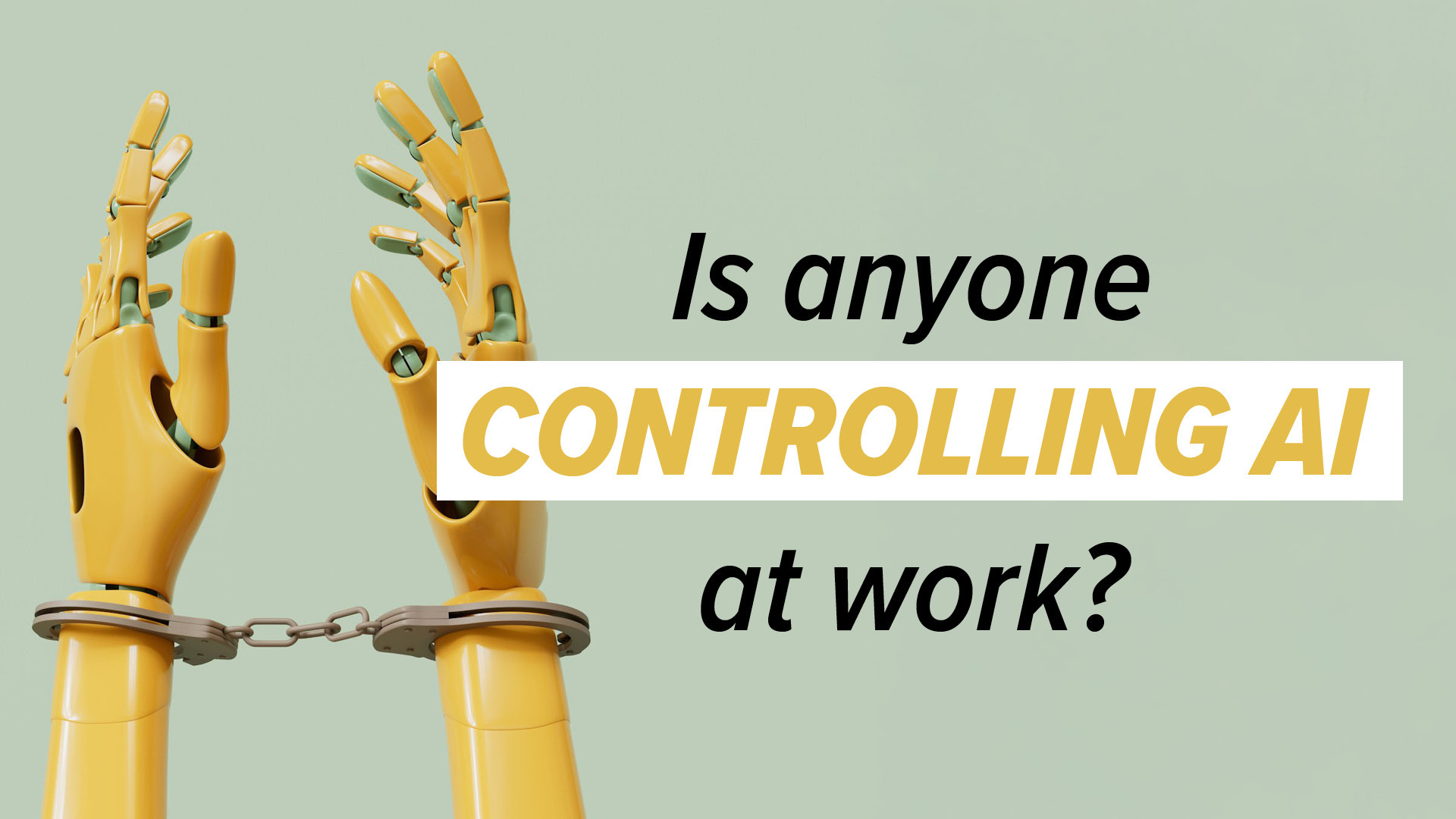
Taking Control of Workplace AI: Why Every Business Needs Clear AI Governance

Introduction
Artificial intelligence (AI) has quickly moved from being a future concept to a daily business tool. Many employees now use generative AI platforms to help them write emails, summarize documents, generate ideas, and solve problems faster. Tools such as ChatGPT, Gemini, and similar systems can save time and improve productivity across many types of work.
But while these tools offer real advantages, their rapid adoption has created a new challenge for businesses. Many organizations have not yet established clear policies or AI governance practices to guide how these tools should be used at work.
For small and medium-sized businesses in particular, this can create hidden risks. Without proper guidelines, employees may unknowingly share sensitive information with external systems that the business does not control.
In this article, we will explore how AI is being used in the workplace today, what shadow AI means, the risks it can create for data security, and why implementing proper governance is now an essential part of running a modern business.
The Rapid Growth of Workplace AI
Over the past few years, generative AI tools have become widely available. Their ability to quickly generate text, analyze information, and assist with everyday tasks has made them very attractive to employees.
What started as experimentation has quickly become a regular part of many workflows.
Employees are now using AI to:
- Draft emails and messages
- Summarize reports or long documents
- Brainstorm ideas
- Write marketing content
- Analyze information
- Generate code
- Solve technical problems
Because these tools are easy to access and often free to use, employees can start using them immediately without needing approval from their IT department.
Recent research shows that AI adoption inside organizations has grown dramatically. In some companies, the number of people using generative AI tools has tripled in just one year.
Even more striking is the volume of activity. Some organizations now send tens of thousands of AI prompts every month. In very large organizations, that number can reach into the millions.
On the surface, this looks like improved efficiency. Employees are getting help with tasks and completing work faster.
However, beneath the surface, there are important questions that many businesses have not yet asked.
For example:
- Which AI tools are being used?
- Are employees using personal or business accounts?
- What type of information is being shared with these systems?
- Does the company have any visibility into how AI is being used?
Without answers to these questions, businesses may be exposing themselves to new risks.
Understanding Shadow AI
One of the biggest concerns surrounding AI adoption is something called shadow AI.
Shadow AI occurs when employees use AI tools that have not been approved or monitored by their organization. Often this happens through personal accounts or third-party applications.
Because these tools sit outside the company’s technology systems, the organization has no visibility or control over how they are used.
This situation is very similar to the earlier concept of “shadow IT,” where employees installed software or used cloud services without approval from the IT department.
The difference is that AI tools process large amounts of information directly entered by the user.
When someone pastes text into an AI tool, they are not simply asking a question. They are sharing data with that platform.
In many cases, employees may not realize the implications of what they are uploading.
For example, they might paste:
- Customer contact details
- Internal reports
- Business strategies
- Pricing information
- Source code
- Meeting notes
- Employee information
Sometimes even login credentials or confidential business data can accidentally be included.
When this happens through unsanctioned tools, businesses lose control over how that information is stored, processed, or used.
This is where data security concerns begin to grow.
Why Data Security Risks Are Increasing
Every time information is shared with an AI system, it leaves the direct control of the business.
Depending on the platform, that data may be:
- Stored temporarily
- Logged for system improvement
- Used for training models
- Processed in external servers
- Subject to different privacy policies
If a business has not reviewed the platform’s terms or implemented proper safeguards, sensitive information could be exposed without anyone realizing it.
Recent reports have shown that incidents involving sensitive data being entered into AI tools have doubled over the past year.
In some organizations, there are now hundreds of these incidents every month.
Again, these are rarely malicious actions. Most employees are simply trying to complete their tasks faster and more efficiently.
But from a data security perspective, even well-intentioned actions can create serious risks.
For example:
An employee might paste a customer email into an AI tool to help draft a reply.
Or someone might upload internal financial notes to generate a summary.
Individually, these actions may seem harmless. However, if done through personal accounts or unauthorized platforms, the company has no oversight.
Over time, this can result in a large amount of sensitive information leaving the organization without proper protection.
The Insider Risk Businesses Often Miss
When companies think about cyber security risks, they often imagine external hackers breaking into their systems.
While those threats are real, modern security challenges also involve internal behaviour.
Not intentional wrongdoing, but everyday actions taken without full awareness of the consequences.
Shadow AI is a good example of this type of risk.
An employee does not need to bypass security systems or steal data to create a problem.
They simply need to paste the wrong information into the wrong tool.
Because AI systems are designed to be helpful and easy to use, they encourage users to provide detailed information.
That means employees may share more context than they normally would with traditional software.
Without AI governance, businesses have little ability to monitor or guide this behaviour.
Over time, this creates a growing gap between how technology is being used and how it is being managed.
Compliance and Regulatory Concerns
Another issue businesses must consider is compliance.
Many organizations operate in industries where protecting customer information is a legal requirement.
Examples include businesses that handle:
- Financial records
- Health information
- Legal documents
- Client databases
- Confidential contracts
If sensitive data is uploaded into an AI platform that has not been approved or reviewed, it may violate internal policies or regulatory obligations.
This can happen even when employees are simply trying to work more efficiently.
For example, copying client information into an AI system to generate a summary might unintentionally breach privacy guidelines.
Because shadow AI tools operate outside the company’s official systems, these issues may go unnoticed until a problem occurs.
Maintaining strong data security practices becomes much more difficult when information is flowing into platforms that the business cannot monitor.
How Cybercriminals Are Using AI Too
While businesses are learning how to use AI tools, cybercriminals are doing the same.
Attackers are increasingly using AI to:
- Analyze stolen data
- Generate convincing phishing emails
- Automate social engineering attacks
- Identify vulnerabilities faster
If sensitive information leaks into AI platforms or online systems, attackers may use AI themselves to exploit that data.
For example, leaked customer details or internal communication styles could be used to craft more convincing scam messages.
This is why strong AI governance and data security practices are becoming critical parts of modern cyber security strategies.
Businesses must assume that both defenders and attackers now have access to advanced AI tools.
Why Banning AI Is Not the Answer
Faced with these risks, some organizations consider banning AI tools entirely.
However, this approach is rarely effective.
AI is already deeply integrated into many business tools, search engines, and productivity platforms. Employees will continue to encounter and use these technologies whether a company formally approves them or not.
Attempting to block AI completely often leads to more shadow AI behaviour.
Employees still want the productivity benefits, so they turn to personal accounts or unofficial tools.
This makes the situation even harder to monitor.
Instead of banning AI, businesses should focus on creating clear and practical governance.
What AI Governance Actually Means
AI governance refers to the policies, guidelines, and oversight that help organizations use AI safely and responsibly.
Rather than stopping employees from using AI, governance provides structure around how it should be used.
Effective governance usually includes several key steps.
1. Identify Approved AI Tools
Businesses should review AI platforms and select specific tools that are approved for work use.
These tools can then be integrated into the company’s existing security and technology systems.
This allows the organization to maintain better visibility and control.
2. Define What Data Can Be Shared
Employees should clearly understand what information can and cannot be entered into AI systems.
For example, organizations may prohibit sharing:
- Customer personal information
- Confidential business strategies
- Financial data
- Legal documents
- Login credentials
Providing clear examples helps employees make better decisions.
3. Improve Visibility
IT teams should have the ability to monitor how AI tools are being used within the organization.
This helps identify unusual behaviour or potential data risks before they become serious issues.
Visibility also helps organizations understand how employees are using AI so they can improve workflows safely.
4. Train Employees
Education is one of the most important parts of AI governance.
Employees need to understand both the benefits and the risks of using AI tools.
Training should focus on practical guidance rather than fear. When people understand how to use AI responsibly, they are far less likely to create accidental security problems.
5. Update Policies Regularly
AI technology is evolving quickly. Governance policies should be reviewed regularly to keep up with new tools, capabilities, and risks.
Businesses that treat AI governance as an ongoing process will be better prepared for future developments.
The Opportunity AI Still Provides
Despite the risks discussed in this article, AI remains an incredibly powerful business tool.
When used properly, it can:
- Improve productivity
- Reduce repetitive work
- Support better decision-making
- Help employees focus on higher-value tasks
- Speed up communication and analysis
The goal of governance is not to slow down innovation.
It is to ensure that businesses can adopt new technologies while still protecting their systems, their clients, and their data.
For small and medium-sized businesses especially, thoughtful governance allows them to benefit from AI without introducing unnecessary risk.
The Future of AI and Security
Looking ahead, one of the most promising developments is the use of AI to improve cyber security itself.
New technologies are emerging that use AI to:
- Analyze security risks
- Detect unusual behaviour
- Prioritize threats
- Respond to incidents faster
This type of intelligent analysis can help businesses stay ahead of evolving threats.
As AI becomes more integrated into security systems, organizations will gain better tools for protecting their data and networks.
However, these benefits will only be effective if businesses maintain strong AI governance and responsible data security practices.
Technology alone cannot replace clear policies and informed decision-making.
Final Thoughts
Artificial intelligence is now part of everyday work across many industries. Employees rely on it to save time, improve productivity, and complete tasks more efficiently.
But the speed of AI adoption has created a gap between how the technology is being used and how it is being managed.
Shadow AI, data exposure, and compliance risks are becoming real concerns for businesses that do not have clear policies in place.
Rather than ignoring the problem or attempting to block AI entirely, organizations should focus on implementing strong AI governance strategies and maintaining responsible data security practices.
With the right guidance and oversight, businesses can safely take advantage of AI’s benefits while protecting the information that matters most.
About Robertson Technology Group
Robertson Technology Group provides managed IT support, technology security, and strategic technology guidance for small and medium-sized businesses across Canada. Their team helps organizations manage complex systems without needing full-time in-house IT staff. By focusing on personalized service, Robertson Technology Group works closely with each client to understand their business needs and provide reliable, secure technology solutions.
From improving cyber security and managing networks to helping companies navigate emerging technologies like artificial intelligence, their goal is to reduce the burden of technology management. This allows business owners and teams to focus on running and growing their organizations while knowing their systems are professionally supported and protected.
