5 min read
Should Your Business Take an “AI Pause” on Fridays? Understanding the Risks of End-of-Week AI Use

Artificial intelligence has become part of the modern workplace faster than almost any other business technology. Tools like Microsoft Copilot can write emails, summarize meetings, create reports, analyse data, and even help generate ideas. For many organizations, these tools save valuable time and reduce repetitive work.
As AI becomes more capable, businesses are naturally finding more ways to include it in their daily operations. Employees who once spent hours drafting documents or searching through information can now complete many of those tasks in just a few minutes.
That efficiency is one of AI’s greatest strengths.
However, efficiency should never replace good judgement.
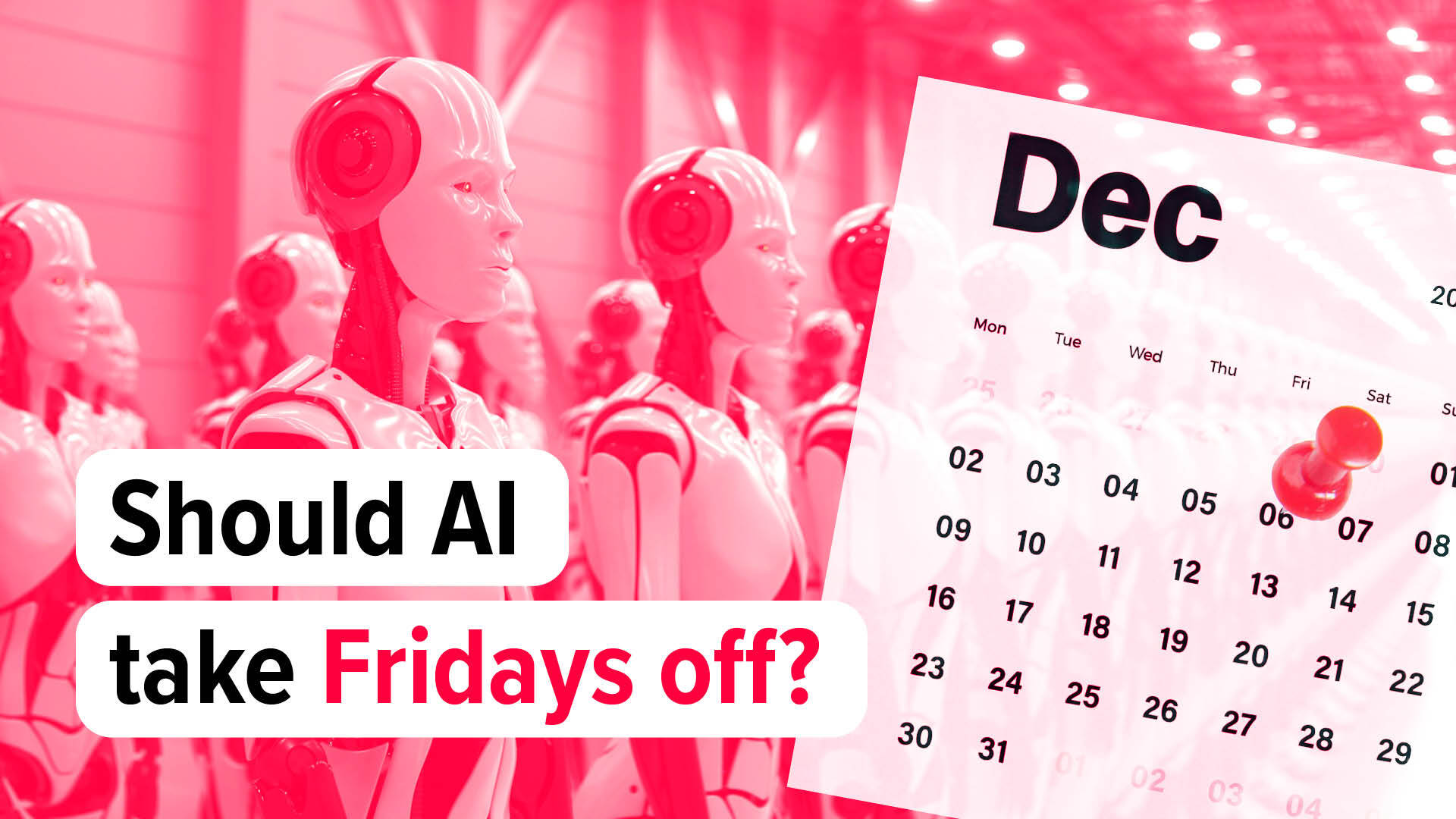
A light-hearted comment such as, “Maybe we should ban AI on Friday afternoons,” might sound like a joke, but it raises an interesting question. Could there be times when people are more likely to misuse AI simply because they are mentally tired?
While completely banning AI would rarely make sense, understanding when mistakes are more likely to happen can help businesses develop better AI governance practices and reduce unnecessary risk.
Why Fridays Can Be Different
By Friday afternoon, many employees have already spent an entire week solving problems, attending meetings, answering emails, and managing deadlines.
Mental energy naturally declines after long periods of concentration. Even highly experienced professionals can find themselves making simple mistakes when they are tired or distracted.
Common examples include:
- Missing spelling or grammar errors.
- Sending information to the wrong person.
- Misreading important details.
- Overlooking inaccurate information.
- Responding too quickly without considering tone.
These types of mistakes existed long before AI.
However, AI can make them easier to miss.
AI Produces Very Convincing Results
One reason AI tools have become so popular is that their responses often look polished.
A document generated by Microsoft Copilot usually appears professional. Emails are properly formatted. Reports are well organized. Sentences flow naturally.
That polished appearance can create a false sense of confidence.
People often assume that because something looks complete, it must also be correct.
Unfortunately, appearance and accuracy are not always the same thing.
AI can:
- Misinterpret context.
- Omit important information.
- Present assumptions as facts.
- Choose wording that sounds unnatural.
- Produce responses that are technically correct but unsuitable for a specific situation.
These issues may be relatively small individually, but they can still affect customer relationships, internal communication, or business decisions.
Fatigue Changes How We Review Information
When people are well rested, they tend to question information more carefully.
They ask questions such as:
- Does this make sense?
- Is this accurate?
- Is anything missing?
- Would I write it this way?
Late on a Friday afternoon, those questions become easier to skip.
Instead of carefully reviewing AI-generated content, employees may simply think:
“This looks good enough.”
That small shift in behaviour is where many problems begin.
The issue is not that AI generated poor content.
The issue is that nobody took the time to verify it.
Tone Matters More Than Many People Realize
One area where AI still struggles is understanding subtle human communication.
An email may contain all the correct information while still sounding:
- Too formal.
- Too casual.
- Cold or unfriendly.
- Overly confident.
- Insensitive to the situation.
Businesses communicate with customers, suppliers, partners, and employees every day.
Each audience expects a different tone.
For example, responding to a frustrated customer requires empathy. Communicating with senior management may require precision and professionalism. Internal team updates often need clarity without sounding overly formal.
AI can usually produce a reasonable first draft.
It should not always produce the final draft.
Human judgement remains essential when communication represents the organization.
The Hidden Risk of Automation
One of AI’s greatest strengths is reducing repetitive work.
But automation also changes how people think.
If AI consistently provides answers quickly, people naturally become more comfortable accepting those answers.
Over time, this can reduce critical thinking.
Instead of analysing information independently, employees may begin relying on AI to perform the thinking process for them.
This does not happen overnight.
It develops gradually through repeated use.
Healthy AI governance encourages employees to use AI as a tool that supports decision-making rather than replacing it entirely.
Understanding AI Fatigue
Another concept receiving increasing attention is AI fatigue.
Unlike traditional workplace fatigue, AI fatigue refers to the mental effort involved in constantly interacting with AI systems.
Employees may spend their day:
- Writing prompts.
- Reviewing AI responses.
- Correcting AI mistakes.
- Deciding whether information is accurate.
- Comparing multiple AI-generated options.
Although AI saves time, continuously evaluating its output still requires concentration.
By the end of the week, that additional mental workload can become exhausting.
Ironically, the more tired someone becomes, the less likely they are to carefully review the AI output they receive.
This creates an interesting cycle.
People rely on AI because they are tired.
But being tired makes it harder to verify the AI’s work.
Microsoft Copilot Is an Assistant, Not a Decision Maker
Microsoft Copilot has become one of the most widely adopted workplace AI tools.
Its integration with Microsoft 365 allows employees to generate presentations, summarize meetings, draft emails, analyse spreadsheets, and search company information far more quickly than traditional methods.
These capabilities can significantly improve productivity.
However, Microsoft Copilot does not understand your business in the same way your employees do.
It cannot fully appreciate:
- Company culture.
- Customer history.
- Business priorities.
- Legal obligations.
- Sensitive workplace dynamics.
Its suggestions should be viewed as recommendations rather than final answers.
The responsibility for reviewing, editing, and approving content always remains with the user.
Good AI Governance Starts with Clear Expectations
Many organizations focus on deploying AI but spend less time deciding how it should actually be used.
Strong AI governance does not need to be complicated.
In many cases, simple guidelines can significantly reduce risk.
Examples include:
- Always review AI-generated emails before sending them externally.
- Verify important facts independently.
- Never assume AI citations are correct without checking them.
- Avoid entering confidential information unless approved by company policy.
- Use AI for drafting rather than final approval.
- Clearly define when human review is mandatory.
These types of guidelines help employees understand that AI supports their work instead of replacing professional judgement.
High-Risk Situations Need Extra Attention
Certain business activities deserve additional review regardless of the day of the week.
These include:
- Customer complaints.
- Financial information.
- Legal documents.
- Human resources communications.
- Security incidents.
- Executive announcements.
- Contract negotiations.
Even if AI creates an excellent first draft, these situations usually require careful human oversight.
Small wording changes can have significant consequences.
Building Better AI Habits
Rather than creating complicated policies, many organizations benefit from encouraging simple daily habits.
For example:
Before accepting AI-generated content, employees can ask themselves:
- Is this factually correct?
- Does it match our organization’s voice?
- Would I be comfortable putting my name on this?
- Is anything missing?
- Does this make sense for this specific audience?
These questions only take a minute or two, but they encourage active thinking instead of passive acceptance.
Should Businesses Really Avoid AI on Fridays?
Probably not.
AI remains valuable every day of the week.
The real lesson is not about Fridays.
It is about understanding human behaviour.
People naturally become more tired after long work weeks. Fatigue affects concentration, judgement, and attention to detail.
When AI produces polished-looking content, those human tendencies become even more noticeable.
Rather than eliminating AI, organizations should recognize when employees may be more likely to trust its output without sufficient review.
Some businesses may even choose to encourage additional peer reviews for important communications sent late in the day or near the end of the week.
Simple safeguards often prevent avoidable mistakes.
The Future of Responsible AI
Artificial intelligence will continue evolving rapidly.
Future workplace AI systems will become more accurate, more personalized, and more deeply integrated into everyday business processes.
As these tools improve, organizations will likely rely on them even more.
That makes responsible AI use increasingly important.
Technology can improve productivity, but good decision-making will always depend on people.
Businesses that combine AI with thoughtful review, clear policies, and ongoing employee education are likely to achieve the greatest long-term benefits.
The goal is not to replace human expertise.
It is to give knowledgeable people better tools while ensuring that experience, judgement, and accountability remain at the centre of every important decision.
At the end of the day, AI should be viewed as a capable assistant rather than an automatic authority. Whether it is Monday morning or 4:30 on a Friday afternoon, taking a few extra moments to review AI-generated work can protect your reputation, improve communication, and reduce unnecessary risk.
How Robertson Technology Group Can Help
Artificial intelligence is becoming a valuable tool for businesses of every size, but using it effectively requires more than simply turning it on. Robertson Technology Group provides managed IT services, cyber security solutions, and technology support for small and medium-sized businesses across Canada. We work closely with each client to develop practical technology strategies that match their unique needs, including guidance on the secure and responsible use of AI tools such as Microsoft Copilot.
Our personalized approach helps organizations improve productivity while maintaining strong security, reducing risk, and ensuring employees have the knowledge and support they need to use modern technology with confidence. By combining proactive IT management with practical cyber security expertise, we help businesses make informed technology decisions that support long-term success.
